A heat pump only works as well as the survey behind it. We measure heat loss room by room, size the emitters to a flow temperature the property can actually run at, and install to MCS standards — which is what makes the £7,500 government grant available to you.
Free initial assessment • MCS-certified installation • Grant paperwork handled for you
Before the grant, before the survey, before anyone quotes you a number — this is the machine you are being asked to buy. It is worth two minutes of your time.
There is no burner anywhere in this picture. The fan pulls in outside air — useful even at −2°C — the refrigerant circuit lifts that low-grade heat to a useful temperature, and the water leaves at the flow temperature your system was designed around. It comes back a few degrees cooler and goes round again. The lower that flow temperature can safely be, the less electricity the whole cycle costs you.
Heating is a system, not a box on a wall. The heat pump is only one part of it — the emitters, the pipework, the cylinder and the controls all decide whether it performs. We take responsibility for the whole thing.
The main event. A monobloc or split air source heat pump feeding your radiators, underfloor heating and hot water cylinder — replacing a gas, oil or LPG boiler entirely. Typically 5kW to 16kW for domestic properties, sized from a calculated heat loss rather than the output of whatever boiler happens to be there now.
Heat pumps make hot water at a lower temperature than a boiler does, so the cylinder has to have enough coil surface area to keep up. We specify and fit properly sized unvented cylinders with a weekly pasteurisation cycle, and we size them around how your household actually uses hot water — not a default figure.
Low flow temperatures need larger emitters. We work out which radiators need upsizing and which are already fine, check the pipework can carry the flow rate, and quote it openly as part of the system rather than discovering it halfway through the install.
For properties where a wet system doesn’t stack up — no gas, a small footprint, a conservatory, an annexe, a garden room — an air-to-air heat pump heats and cools the space directly. Faster to fit, far cheaper, and no cylinder. It does not qualify for the £7,500 grant, and we’ll always be straight with you about that.
Weather compensation, room-by-room control and a system set up to run continuously at a low temperature rather than blasting on and off. Configured properly at commissioning and explained to you in plain terms, because a heat pump run like a boiler will cost you money.
Annual servicing to keep the manufacturer warranty valid and the efficiency where it should be. Refrigerant work by F-Gas registered engineers, records kept for every visit, and the same team on the phone as the one that fitted it.
Every photograph on this page is a system our own engineers designed, installed and commissioned.
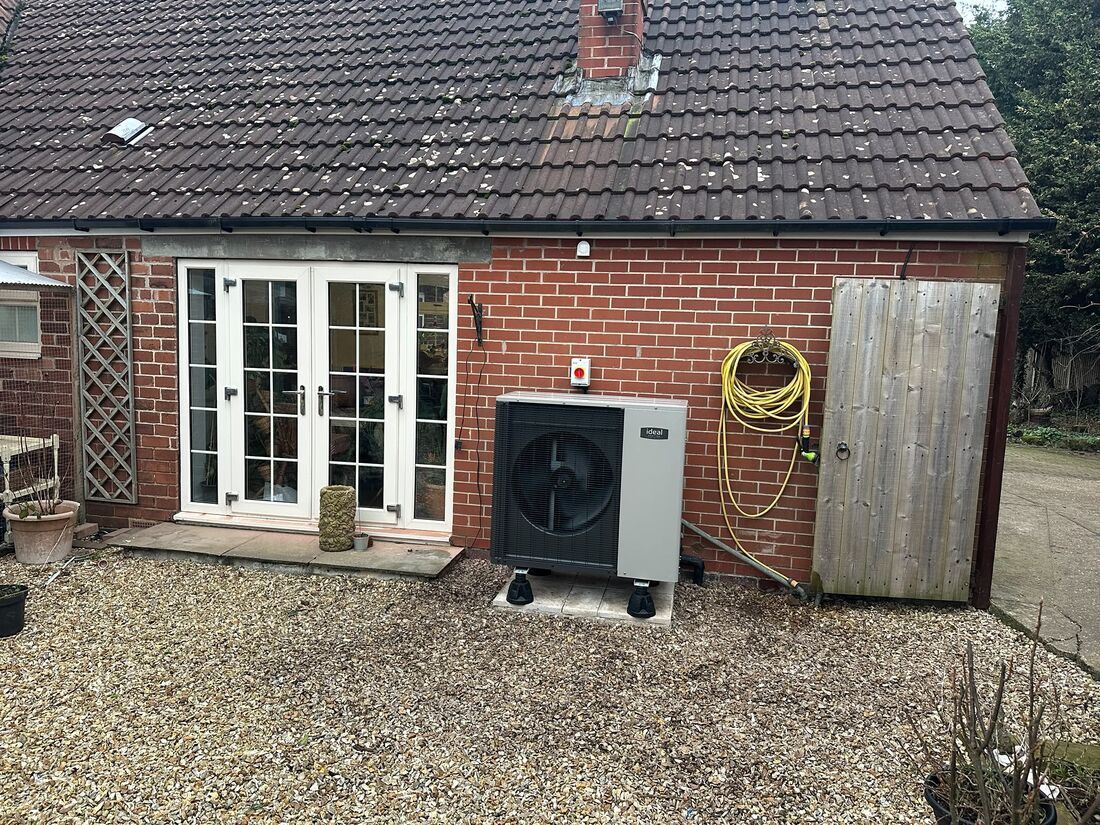
An outdoor unit needs clear airflow in and out, a level base that will still be level in five years, and somewhere for defrost water to drain that will not ice over a path in January. Get any of those wrong and you have a system that underperforms in exactly the weather you bought it for.
We assess siting against the MCS noise requirements at survey — your windows, your neighbours’ windows, and any wall or fence that will bounce sound back. It is far cheaper to move a unit on a drawing than on a driveway.
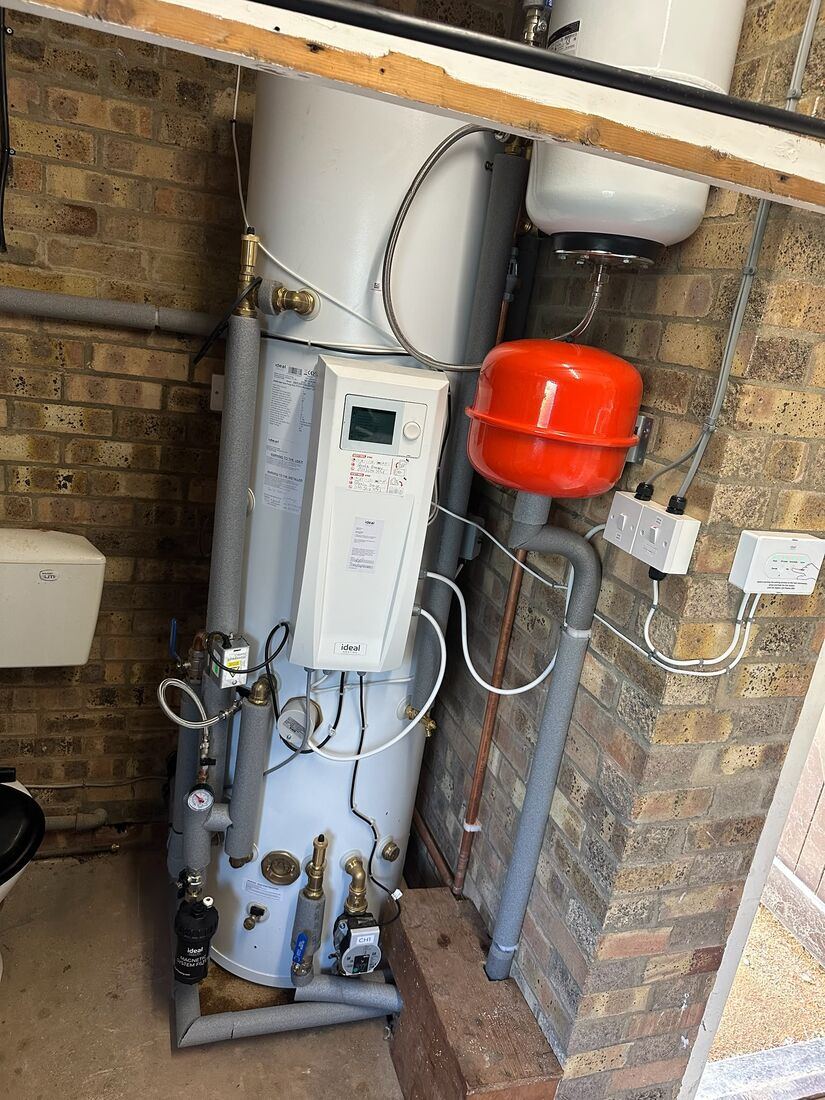
If you are coming from a combi boiler, finding cylinder space is usually the biggest practical question of the whole project. We look at that on the first visit rather than discovering it on installation day.
Coil surface area, not just volume, is what decides how quickly the cylinder recovers. We size it around how your household actually uses hot water — two adults and a bath is a different problem from four people and two showers before eight in the morning.
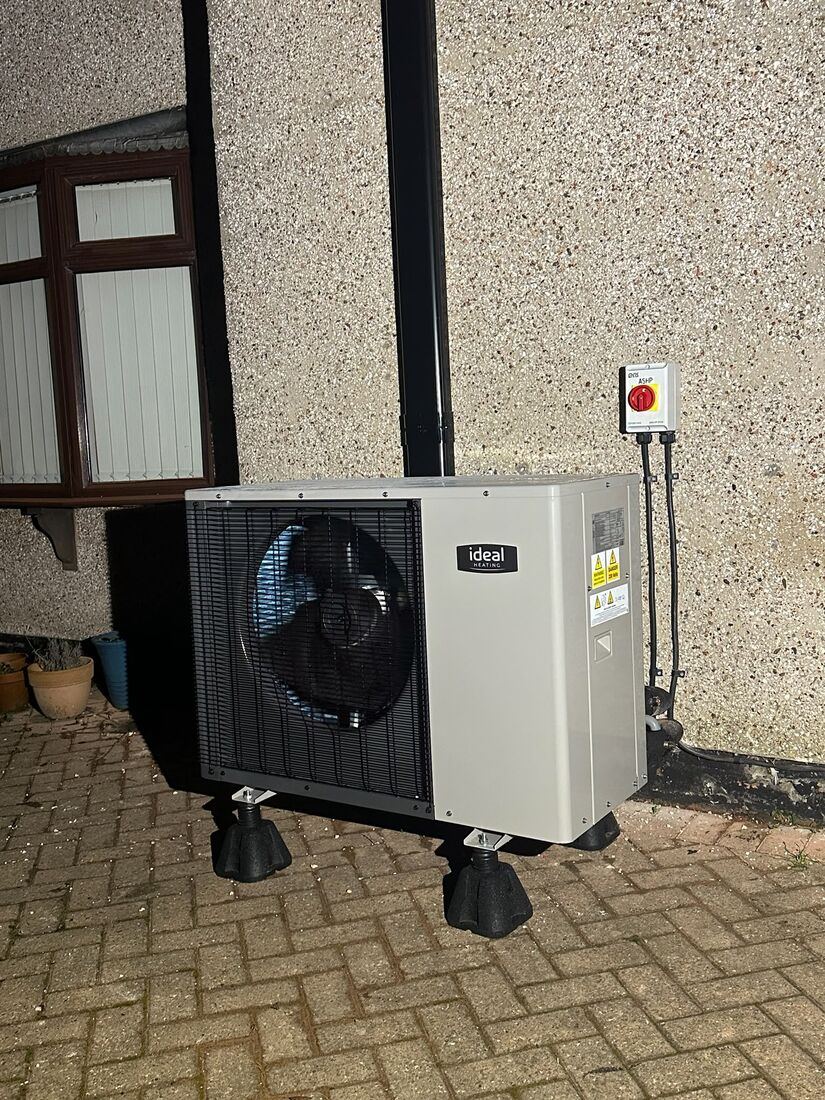
Pipework properly clipped and insulated, condensate run away from footpaths, cabling in trunking rather than draped, and the unit sitting square. None of this affects the physics. All of it tells you how the rest of the job was done.
Every installation is left with a handover pack: MCS certificate, commissioning record, warranty registrations and a service schedule. It is the folder a future buyer’s solicitor will ask for, and it is a great deal easier to hand over than to reconstruct.
“Nearly every disappointing heat pump we’re called out to was installed against the old boiler’s output instead of the building’s heat loss. The equipment is rarely the problem. The survey was.”
ArcticNord engineering teamHeating a room and heating a cylinder of water are two different jobs, and a heat pump does the second one differently from a boiler. This is the part most quotes gloss over.
The cylinder is the part of a heat pump system people understand least and notice most. Here is a real morning — it plays itself.
The Boiler Upgrade Scheme is a government grant paid through your installer. We apply for it, it comes off your quote before you pay anything, and you never handle the money. Here’s what actually qualifies — including the bits other installers tend to leave out.
| The question | The honest answer |
|---|---|
| How much is it? | £7,500 towards an air-to-water air source heat pump, or a ground source heat pump. From 21 July 2026 an increased grant of £9,000 is available for eligible properties that are off the gas grid, running until 31 March 2027. We’ll confirm which band your property falls into before you commit to anything. |
| Does an air-to-air system qualify? | No. Air-to-air heat pumps — the type used for air conditioning and direct room heating — are not eligible for the Boiler Upgrade Scheme. They can still be an excellent choice on running cost and comfort, but if the grant is what makes the project work, you need an air-to-water system. |
| What do I need in place? | A valid EPC for the property with no outstanding recommendations for loft or cavity wall insulation, and the property must be replacing a fossil fuel heating system. New builds are generally excluded. We check all of this before you spend anything. |
| Who applies for it? | We do. The grant is claimed by the MCS-certified installer, not the homeowner. You confirm the application by email, we deduct the grant from your invoice, and Ofgem pays us directly. |
| What about VAT? | Qualifying energy-saving materials, including heat pumps, are currently zero-rated for VAT on installations in residential property until 31 March 2027. After that date the reduced 5% rate is due to apply. |
| Will you tell me if it isn’t worth it? | Yes. If your property is poorly insulated, or the emitter upgrade cost swallows the grant, or the payback simply isn’t there, we will say so at survey. We would rather lose a job than fit a system that disappoints you for the next fifteen years. |
General guidance, not financial or legal advice. Grant levels, eligibility rules and VAT treatment are set by government and can change. We will confirm exactly what applies to your property in writing before you commit.
This is the calculation we run at every survey, with your numbers instead of ours. It is also the fastest way to see why we argue so hard about flow temperature — and why the cheapest quote with the smallest radiators is usually the most expensive system to live with.
Nothing changes here except the temperature the water leaves at — and it changes everything. Watch it run, or pick one.
Illustrative, not a quotation. Modelled on 12,000 kWh of annual heat demand, electricity at 26.11p and gas at 7.33p per kWh (Ofgem cap, July–September 2026), and a gas boiler running at 88% seasonal efficiency. Radiator area follows the standard emitter output relationship — it is exactly why a 35°C design usually means underfloor heating rather than radiators. We produce real figures for your property at survey.
Seven stages, and you know where you are at every one. Most domestic installations take three to five days on site once the survey and design work are done.
A phone call or an enquiry form. We ask about the property, the current heating, the insulation and what’s prompting the change — and we’ll tell you honestly at this point if we think a heat pump isn’t the right answer. It costs you nothing and saves everyone time.
We measure every room: wall construction, glazing, floor, ceiling, orientation, air changes. From that we calculate a heat loss figure per room and for the whole property. This is the number the entire design hangs on, and it is why we won’t quote from a phone call or a postcode lookup.
Heat pump capacity chosen against the calculated load. Emitters sized for the design flow temperature — we aim low, because a lower flow temperature means a higher efficiency every hour the system runs. Cylinder sized to your hot water demand. Outdoor unit sited for airflow, noise and defrost drainage.
Equipment, capacities, flow temperature, predicted efficiency, which radiators change and which stay, the grant deducted, and a fixed price. No provisional sums, no day-rate extras. If we’ve missed something at survey, that is our problem and not your invoice.
We handle the Boiler Upgrade Scheme application, the EPC check, the MCS documentation and the DNO notification for the electrical supply where one is needed. You confirm by email. That is the extent of your admin.
Floor protection, dust extraction on every core drill, a clear-down at the end of each day rather than at the end of the job. In most cases you are without heating for a single day, and we plan around that — particularly in winter and particularly if there’s anyone vulnerable in the house.
System balanced, flow temperature and weather compensation curve set, controls configured and explained until you’re comfortable with them. You get the MCS certificate, the commissioning record, warranty registrations and a service schedule — in one folder, everything a future buyer’s solicitor will ask for.
Two identical heat pumps in two identical houses can differ by hundreds of pounds a year, entirely because of decisions made at design stage. These are the ones that matter.
Every degree you drop the flow temperature raises efficiency. We design for 45°C or lower wherever the fabric allows, rather than 55°C for an easy life on emitter sizing.
Bigger radiators, or the same radiators in a better-insulated room. We tell you exactly which rooms need a change and why, before you sign.
A headline COP at 7°C flatters everything. We quote seasonal performance across a real UK heating season, which is the number your electricity bill actually responds to.
The system reads outside temperature and adjusts flow temperature continuously, instead of running flat out and stopping. Set correctly at commissioning, not left on the factory default.
An undersized coil means long reheat times and a heat pump forced to run at high temperature. We size the cylinder for the heat pump, not for the boiler it replaced.
Outdoor unit position assessed against the MCS noise requirements and your neighbours’ windows — and against defrost water, which has to drain somewhere that won’t ice over a path in January.
If loft insulation or draughtproofing would cut the required capacity, we’ll say so. A smaller heat pump in a tighter house beats a bigger one in a leaky one, every time.
We check the incoming supply, the consumer unit and the DNO position early. Finding out about a supply constraint on installation day is nobody’s idea of a good week.
A selection of heat pump, cylinder and pool installations completed by our engineers. Click any photograph to see it full size. Our survey and installation patch is the East Midlands, Lincolnshire and Yorkshire — the further-afield jobs shown here were carried out by the same team.
Yes — provided it has been sized against a calculated heat loss for the coldest design conditions in your area, and the emitters can deliver that heat at the design flow temperature. Modern units produce useful heat well below freezing. Where heat pumps disappoint, it is almost always a sizing or emitter problem rather than a limit of the technology.
No, but insulation changes the numbers. A leakier property needs a larger unit, larger emitters and runs at a higher flow temperature, so it costs more to install and more to run. We’ll show you what improving the fabric would do to both figures so you can decide where your money goes first. Note also that outstanding loft or cavity wall insulation recommendations on your EPC can block the grant.
Usually not all of them. In a typical property some radiators are already large enough for a lower flow temperature — often the ones in rooms that were always slightly too warm. We identify room by room which need changing and include it in the fixed price rather than raising it mid-job.
It depends on your tariff, the design flow temperature and how well the system is commissioned. A well-designed system delivers roughly three to four units of heat per unit of electricity across a season, which offsets the fact that electricity costs more per unit than gas. A heat pump tariff makes a substantial difference. We’ll model your specific case at survey rather than quote you an industry average.
The outdoor unit produces a low hum, comparable to a fridge at a few metres. Siting is assessed against the MCS noise requirements as part of the design, taking account of your windows, your neighbours’ windows and any reflective surfaces nearby. Indoors, the system is effectively silent.
An outdoor unit roughly the size of a large washing machine, on a level base with clear airflow, and indoors a hot water cylinder plus a small amount of pipework and controls. If you currently have a combi boiler and no cylinder, finding cylinder space is usually the main planning question — we look at that at survey.
Most domestic air source heat pump installations fall under permitted development in England, subject to conditions on siting, size and noise. Listed buildings, conservation areas and flats are the common exceptions. We flag anything we spot at survey, but the final position sits with your local planning authority.
Then we’ll tell you, and we’ll set out what we’d do instead — which might be air-to-air heating for part of the property, fabric improvements first, or simply staying put for now. We install air conditioning, heat pumps and solar, so we have no reason to push you towards one of them.
Heat pump work is surveyed and installed from our base in Bilsthorpe, Nottinghamshire, across seven counties.
Tell us about the property and what you’re trying to solve. We’ll come back to you with the sensible next step — which is not always a heat pump, and we’ll say so if it isn’t.
We read every enquiry ourselves. If a heat pump looks right for the property we’ll book a survey; if it doesn’t, we’ll tell you what we’d do instead. No call centre, no pressure, no salesperson on commission.
Choose which cookies we may use. Necessary cookies are always on. See our Cookie Policy for details.