Most solar quotes start with how many panels fit on the roof. Ours start with your consumption — how much electricity you use, and crucially when you use it. That is what decides whether a system pays for itself or simply exports cheaply to the grid.
0% VAT until 31 March 2027 • MCS-certified installation • DNO notification handled for you
Solar quotes talk about generation. Your bill responds to something different — where that generation actually ends up. Step through a day and watch it move.
Generation is the headline. Where it ends up is the money. This plays itself — or step through it yourself.
Panels are the visible part and the least interesting one. What separates a good installation from an average one is the inverter strategy, the battery sizing and how the whole thing behaves on a dull February afternoon.
Roof-mounted, in-roof or ground-mounted arrays on pitched and flat roofs. Panel layout planned around your roof’s orientation, pitch and any shading from chimneys, dormers, aerials and trees — because a badly planned string can lose you more output than a slightly less efficient panel ever would.
The part that turns a modest saving into a real one. A battery stores your midday surplus for the evening peak, and on a time-of-use tariff it can charge from the grid overnight at a low rate. We size it against your evening load and your tariff, not against a round number.
Hybrid inverters for new systems so solar and battery run as one, and AC-coupled retrofits where you already have panels and want to add storage without disturbing a working array. We’ll happily add a battery to somebody else’s solar installation.
A charge point integrated with the solar system so the car can prioritise surplus generation rather than pulling from the grid. If you drive an EV, it changes the economics of solar more than almost any other factor — it turns daytime generation into fuel.
App-based monitoring so you can see generation, consumption, battery state and export in real time. We register the system on the MCS database and give you everything you need to apply for a Smart Export Guarantee tariff with your chosen supplier.
Solar and a heat pump work well together, but only if they’re designed together — the heat pump moves a large electrical load onto your own generation. Because we fit both, we can model the pair as one system instead of two contractors guessing at each other’s numbers.
What the work looks like, and the decisions behind it.
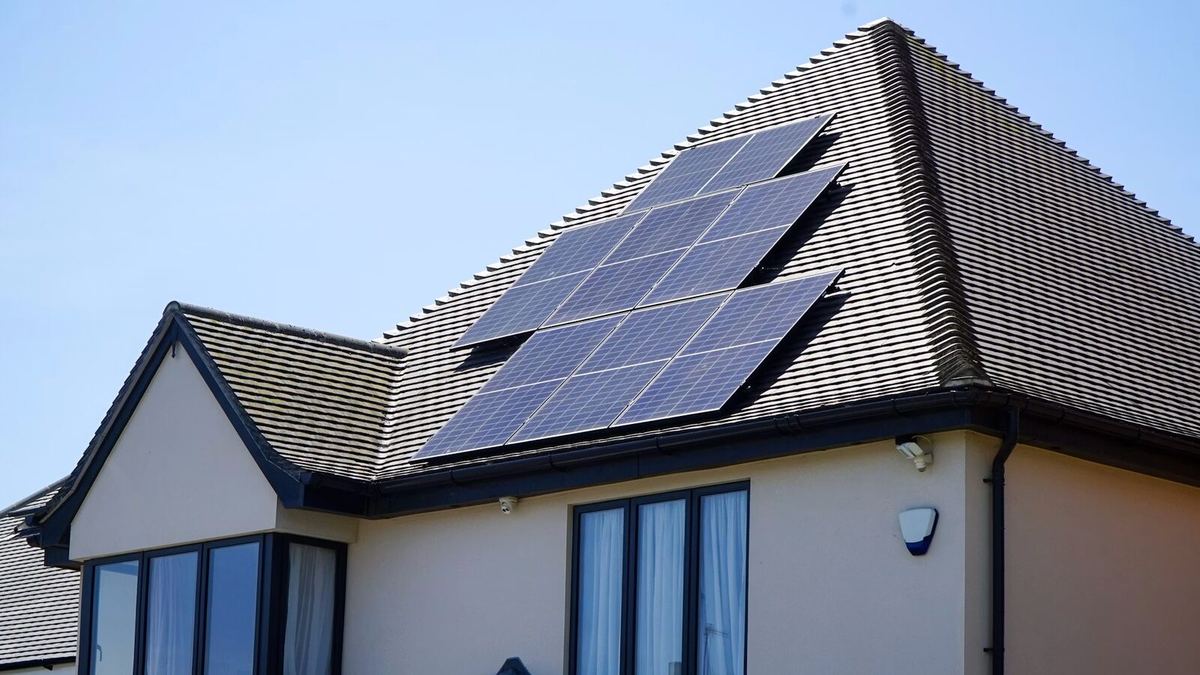
Filling a roof is easy. Filling it well means planning strings around measured shading, keeping the array off the edges where wind uplift is highest, and leaving room to work if a panel ever needs to come off.
Roof penetrations are flashed and weathered properly. Panels will be up there for twenty-five years or more, so if the roof underneath has only a few years left in it we will tell you before we fix rails to it — not after.
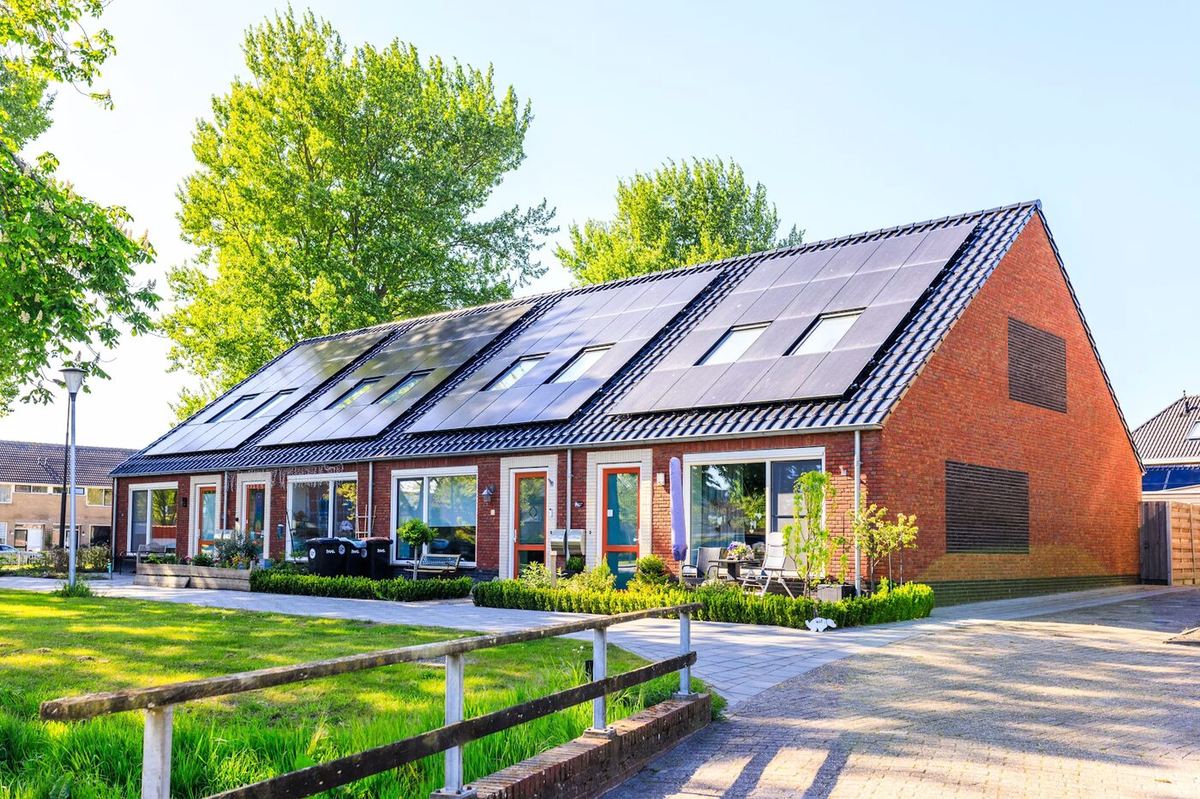
Very few real roofs are a clean rectangle. Working around obstructions changes the string layout, and one badly placed panel can drag down everything wired in series with it.
This is where optimisers genuinely earn their keep — and where they are often sold on roofs that do not need them. We will tell you which of the two you are looking at.
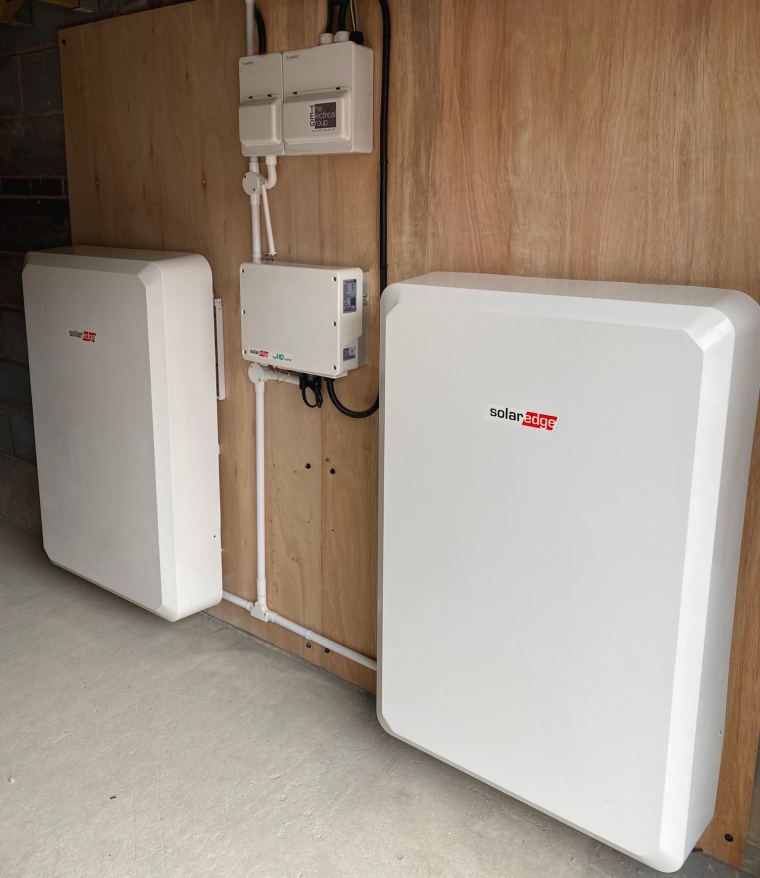
Without storage, a typical household uses roughly a third of what it generates and exports the rest for a fraction of what it costs to buy back. A battery moves your midday surplus into the evening, which is when the house is actually busy.
On a time-of-use tariff it does a second job as well: charging overnight at a low rate so you ride through the following evening peak regardless of what the weather did. We size it against your load and your tariff, not against a round number.
“A system that generates plenty and exports most of it isn’t a good system. The money is in what you use yourself — which is a question about your evenings, not about your roof.”
ArcticNord engineering teamSolar economics get oversold and then undersold. Here is the honest version of what drives your return, so you can interrogate any quote — ours included.
| What people ask | What actually matters |
|---|---|
| How much will it generate? | We use the standard MCS methodology — your roof’s orientation, pitch, location and measured shading — to produce an annual kWh estimate. South-facing is best, but east-west arrays often suit households better because they generate across the morning and evening rather than peaking at midday when nobody is home. |
| How much will I save? | Far more from the electricity you use yourself than from what you export. Self-consumption is typically 25–40% of generation without a battery and can rise substantially with one. This is why we ask for your usage pattern before quoting a system size. |
| What do I get paid for exports? | Through the Smart Export Guarantee. Rates vary considerably between suppliers and are not fixed by government, so it pays to shop around rather than default to your current supplier. MCS certification of the installation is required to apply. |
| Do I need a battery? | Not necessarily. If you’re at home during the day and use most of what you generate, a battery adds less than the brochures suggest. If the house is empty until six, or you’re on a time-of-use tariff, or you have an EV or a heat pump, it changes the picture entirely. We’ll model both. |
| What about VAT? | Qualifying solar panels and battery storage installed in residential property are currently zero-rated for VAT until 31 March 2027, after which the reduced 5% rate is due to apply. Batteries retrofitted to an existing system also qualify. |
| Who tells the grid? | We do. Smaller domestic systems are notified to the Distribution Network Operator after commissioning under G98; larger systems or those with substantial battery capacity need G99 approval before installation. We handle the application either way and factor the timescale into your programme. |
General guidance, not financial advice. Generation estimates are modelled, not guaranteed, and actual output varies with weather and use. VAT treatment and export tariffs are set by government and suppliers and can change.
Move the battery slider first. Watch what it does to the share of your own generation you actually keep — that single figure explains most of the difference between a solar system that pays for itself and one that quietly exports its value to your supplier.
The number that matters is not how much you generate, it is how much of it you use yourself. Move the battery slider and watch that figure — it is the whole argument for storage. Prices default to the Ofgem cap for July–September 2026.
Illustrative, not a quotation. Generation is modelled at roughly 900 kWh per kWp for an unshaded, well-oriented roof in the East Midlands — orientation, pitch and shading move this figure substantially. Self-consumption is modelled from battery capacity against a typical household demand profile; your own pattern of use, and whether you run an EV or a heat pump, matter as much as the hardware. We model your actual half-hourly data at survey.
Seven stages. Most domestic installations are on and off the roof within one to two days, with scaffolding up a little longer.
Before anyone climbs a ladder we want your annual consumption in kWh and, ideally, a sense of when you use it. Half-hourly data from a smart meter is gold dust here. This is the single biggest factor in whether the system you end up with is the right one.
Orientation, pitch, roof construction, tile or slate condition, rafter spacing and measured shading through the day. We also check the loft, the incoming supply and where an inverter and battery can safely and sensibly live.
Array layout and string configuration, inverter sizing, battery capacity matched to your evening load, and optimisers only where shading genuinely warrants them rather than as a default upsell. You get a modelled annual yield and a self-consumption estimate specific to you.
Panels, inverter, battery, mounting system, scaffolding, electrical work and the DNO application — itemised, at a fixed price, with the predicted generation and an honest payback range rather than a best case dressed up as a forecast.
G98 notification or G99 approval as appropriate, submitted by us. Where prior approval is required we build the network operator’s response time into the programme so the date we give you is a date we can keep.
Scaffold, mounting rails, panels, cabling, inverter, battery and consumer unit work. Roof penetrations properly flashed and weathered, cable routes planned rather than improvised, and the loft left as we found it.
System tested and commissioned, monitoring set up on your phone and the settings explained. You get the MCS certificate, the electrical certificate, the DNO paperwork and your export application pack — everything a supplier or a future buyer will ask for.
Two systems of identical size on identical roofs can differ substantially in what they save you. These are the decisions that cause it.
Every unit you use yourself is worth several times a unit exported. Sizing starts here, which is why we ask for your bill before we count panels.
One shaded panel can drag a whole string down. We plan strings around measured shading and use optimisers where they earn their keep — not on every job as a matter of course.
Slightly under-sizing the inverter relative to the array is often deliberate and correct in UK conditions. We’ll explain the ratio we’ve chosen and why.
No battery returns everything you put in. We use realistic round-trip efficiency in the modelling rather than nameplate capacity.
A time-of-use tariff plus a battery can beat a bigger array. We look at your tariff options as part of the design, not as an afterthought.
Panels last decades. If the roof underneath has a few years left in it, we’ll tell you before we fix rails to it rather than after.
Mesh at the array perimeter where pigeons are a known local problem. Cheap at installation, expensive and messy to retrofit.
An EV or a heat pump in the next few years changes the right answer today. We’d rather design once for where you’re heading.
Roof layouts, inverter installations and storage. Click any photograph to see it full size.
Yes. Solar panels respond to daylight rather than heat, and they actually run slightly more efficiently in cool conditions. UK irradiance is lower than southern Europe, which is accounted for in the modelling — it changes the size of the system you need, not whether it works.
No. South-facing gives the highest annual total, but east-west arrays spread generation across morning and evening, which often matches household demand better and can lift self-consumption. We model your specific orientation rather than applying a rule of thumb.
It depends on system cost, how much you use directly, your tariff and your export rate. We give a range based on your own consumption data rather than a single confident figure, and we show the assumptions so you can challenge them.
Most domestic roof-mounted solar falls under permitted development in England, subject to conditions on projection and siting. Listed buildings, conservation areas, flats and some ground-mounted arrays are the common exceptions. We flag anything we spot at survey, but the final position rests with your local planning authority.
Not by default. For safety, systems disconnect from the grid when supply fails. Some battery systems can be configured with a backup circuit that keeps selected loads running — it needs to be designed in from the start, so tell us at survey if it matters to you.
Very little. UK rainfall handles most cleaning, and the main tasks are keeping the array clear of debris and moss, checking the monitoring occasionally for a dropped string, and an inverter check every few years. Batteries and inverters have their own warranty periods, which we register for you.
Yes. An AC-coupled retrofit battery works alongside an existing solar installation without replacing the inverter, whoever fitted it. It’s a common upgrade for systems on older, higher-rate export arrangements where using more of your own generation is the better move.
If you’re considering both, tell us — the answer depends on your heating fuel, your roof and the grant position. A heat pump substantially increases your electricity demand, which strengthens the case for solar. Because we install both, we can model them together and give you an order of work rather than a sales pitch.
Solar surveys and installations are run from our base in Bilsthorpe, Nottinghamshire, across seven counties.
Send us a recent electricity bill or your annual kWh figure and a rough idea of the roof, and we’ll tell you what’s realistic — generation, self-consumption and payback — before anyone visits.
We’ll come back with an indicative system size and yield based on your actual usage. If the roof or the numbers don’t work, we’ll say so at that point rather than booking a survey to tell you in person.
Choose which cookies we may use. Necessary cookies are always on. See our Cookie Policy for details.